SHOP

TOUCH Gear

Search
This study is for people with early-stage, endocrine receptor-positive (ER+) and HER2-negative breast cancer.
Everyone who joins the study will receive ribociclib along with endocrine therapy for about three years, and doctors will monitor their health for several years after treatment.
Ribociclib (Kisqali®) and endocrine therapy have already been studied together in a large clinical trial and are approved for use in this type of breast cancer. This combination is known to be safe and effective. One of the aims of this study is to include a wider range of patients than were involved in earlier studies, hence the name WIDER.
Everyone who joins the study will receive ribociclib along with endocrine therapy for three years, and doctors will monitor their health for several years after treatment.
Thinking about joining
ADJUVANT WIDER?
Get information on ADJUVANT WIDER delivered to you by emailing [email protected].
What exactly is a clinical research study or clinical trial?
Clinical trials are an important step in discovering new treatments for breast cancer and other diseases as well as new ways to detect, diagnose, and reduce the risk of disease.
On average, a new medicine to treat breast cancer has been studied for at least 6 years (and sometimes many more) before a clinical trial on it is started.
  • Clinical trials show researchers what does and doesn’t work in people.
  • Clinical trials help researchers and doctors decide if the side effects of a new treatment are acceptable when weighed against the benefits offered by the new treatment.
  • Patient safety is the highest priority in every study. There are strict rules to protect the safety and privacy of all study participants.
We know that “standard” studies don’t always reflect our lived experiences. That’s why the WIDER trial is different—it’s designed to see how this treatment works in our real, everyday lives.
Study doctors will:
  • Observe whether the cancer returns or spreads during and after treatment.
  • Collect more information about how safe the treatment is and how well it works, including any side effects patients experience
  • Assess how the treatment affects patients’ daily life and well-being
  • Measure how long patients remain well after starting treatment, focusing on overall survival
We know that “standard” studies don’t always reflect our lived experiences. That’s why the WIDER trial is different—it’s designed to see how this treatment works in our real, everyday lives.
Study doctors will:
  • Observe whether the cancer returns or spreads during and after treatment.
  • Collect more information about how safe the treatment is and how well it works, including any side effects patients experience
  • Assess how the treatment affects patients’ daily life and well-being
  • Measure how long patients remain well after starting treatment, focusing on overall survival
Black women are underrepresented in clinical trials, often making up around 3% of participants in trials leading to FDA drug approvals (especially in cancer), despite being disproportionately affected by diseases like breast cancer.
Together, we can have a voice in research.
Together, we can change the game for Black women, our community, and generations to come.
Because Black women with HR+/HER2− breast cancer have a higher risk of recurrence and worse survival outcomes compared to White women, it’s important for us to participate in clinical trials. This study is primarily measuring how many people stay free of breast cancer three years after starting treatment.
For more info, Email [email protected]
What happens during the study?
The study is divided into three periods:
  • Screening period: Doctors will assess whether you meet the criteria to participate in the study.
  • Treatment period: If you qualify, you will receive ribociclib (pill taken orally for 21 days, then a 7-day break, repeating every 28 days) along with daily endocrine therapy for about 3 years. This is an “open label” study, which means all participants receive ribociclib plus endocrine therapy. There is no comparison or placebo group.

    During the treatment period, you will have regular visits with your study doctor to monitor your health, manage any side effects, and ensure your treatment is working as planned. These visits are scheduled to fit your treatment cycle and help support your well-being throughout the study.
  • Follow-up period: After completing treatment, your health will be monitored for up to 4 additional years to track your well-being and check if the cancer returns. This follow-up period involves only occasional check-ins or visits, so the time commitment for you will be minimal.
This study is for people who:
  • Are 18 years or older who have had surgery for early-stage, endocrine receptor-positive (ER+), HER2-negative breast cancer
  • Started endocrine therapy within the past 36 months and have at least 3 years of endocrine therapy remaining
  • Have had their stage III, IIB, or a subset of IIA cancer completely removed by surgery (patients who have completed radiation therapy prior to or after surgery are eligible for this study, so long as the cancer was completely removed during surgery and they’ve recovered enough before starting treatment)
  • Patients should be able to manage daily activities on their own, such as eating, using the bathroom, and moving around without significant help
You won´t be able to take part if:
  • The cancer has spread to distant parts of the body (beyond nearby lymph nodes).
  • The cancer has come back after surgery.
  • You have already completed most or all of your adjuvant endocrine therapy or if you started that therapy many years ago – this study is for people who started endocrine therapy within the past 36 months and have at least 3 years of endocrine therapy remaining
  • You have a serious health problem that is not under control (such as uncontrolled heart disease).
  • You are pregnant, breastfeeding, or planning to become pregnant during the study.
  • You are able to become pregnant but are not using reliable birth control.
  • Ribociclib is an already FDA-approved medicine used with endocrine therapy for people with ER+/HER2- early and advanced breast cancer.
  • This study is being done to collect even more information about how ribociclib works in a wider group of people and in everyday care settings. The study drugs (ribociclib + standard endocrine therapy) may lower the chance of your cancer coming back.
  • Doctors who are experts in treating breast cancer will keep a close eye on your health throughout the study.
  • Information learned from this study may help others with breast cancer in the future.
  • You will receive the study drug and have study-related tests and visits at no cost to you.
  • There is a chance that the study drugs (ribociclib + standard endocrine therapy) will not lower the chance of your cancer coming back.
  • As with all medicines, there is a chance of side effects from the study drug. Your study doctor will talk with you about all possible risks before you decide to join.
  • Attending study visits is very important, but it takes time.
How You Will Be Supported With Navigation During the Adjuvant WIDER Study
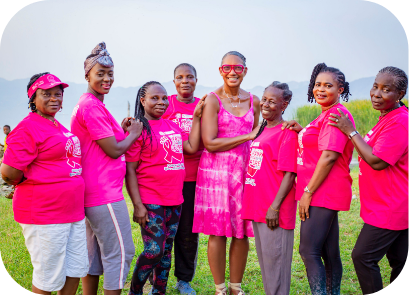
In order to make you feel comfortable and supported in this clinical trial, the researchers are partnering with two breast cancer advocacy groups that provide services specifically for Black patients with breast cancer. TOUCH, The Black Breast Cancer Alliance (TOUCH BBCA) and The Chrysalis Initiative (TCI) are survivor-founded advocacy organizations that serve Black women and help them get through breast cancer. Depending on where you are getting your care, either TOUCH BBCA or TCI will be available to you for support and guidance. Email [email protected].
About TouchBBCA
Breast cancer is a different disease for Black women. Black Breast Cancer, then, is the constellation of exposures, experiences, and lack of science for Black women diagnosed with breast cancer that causes Black women to face disproportionately worse breast cancer outcomes.
Our mission is to drive the collaborative efforts of patients, survivors, advocates, advocacy organizations, health care professionals, researchers, and pharmaceutical companies to work towards the common goal of eradicating Black Breast Cancer. Our work requires partnership, shared resources and knowledge, and consistent action so that we can hold each other accountable towards advancing critical, life-saving science for Black breast cancer survivors/thrivers.

About The Chrysalis Initiative
The Chrysalis Initiative exists to disrupt outcome disparities within breast cancer, so every patient receives the care they deserve. By providing patients with mentoring and resource navigation and equipping Black women (and other disparate groups) with the opportunity and education to assess their breast cancer risk, we are closing the gap one story at a time.
In addition to supporting patients with breast cancer, The Chrysalis Cancer Curriculum Provider Training challenges institutional realities with evidence-based strategies to guide providers as they reshape their paradigms and improve their practices to eradicate treatment disparities.